

.webp?v=76844174e902)
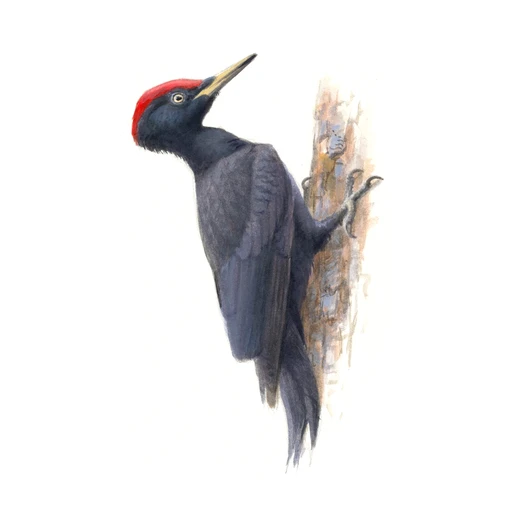
Zwarte Specht
Waar houdt ie van
Rust. Oude loof- en naaldbossen met dikke bomen, liefst met wat dood hout ertussen. In park of erf: laat een paar oude bomen staan. En als er eentje doodgaat? Niet meteen wegzagen. Een hoge stronk mag blijven. In landbouwgebied: hou houtwallen, singels en kleine bosjes breed en rommelig. Plant eik, beuk, berk, den en spar in groepjes. Maak het niet te netjes.
Ecologisch belang
Deze specht is de timmerman van het bos. Zijn grote nest- en slaapholen worden later gebruikt door bosuil, kauw, boomklever, vleermuizen en soms zelfs een bijenzwerm. Hij jaagt vooral op mieren en keverlarven. Minder mieren in de stam, minder rot in de boom. Opruimen hoeft niet: hij doet het werk.
Wanneer in Nederland
Hele jaar. Je hoort ’m vaak eerder dan je ’m ziet: een harde roep en een roffel die door het bos snijdt.
Status
Broedvogel. Lokaal algemeen in grotere bosgebieden, schaars waar oud bos en dood hout ontbreken.
Het geluid van...
OH NEEEEE, hoe klinkt de Zwarte Specht dan?! We hebben nog geen goede opnames van deze vrolijke fluiter in onze database. weet jij het? Heb je hem wel eens gehoord? of heb je een goeie opname van deze soort, laat het ons weten en mail naar: [email protected]
We blijven deze tekst aanscherpen. Mis je iets of klopt er iets niet? Mail [email protected] en help mee. Dan strijken we samen de veren weer even goed.